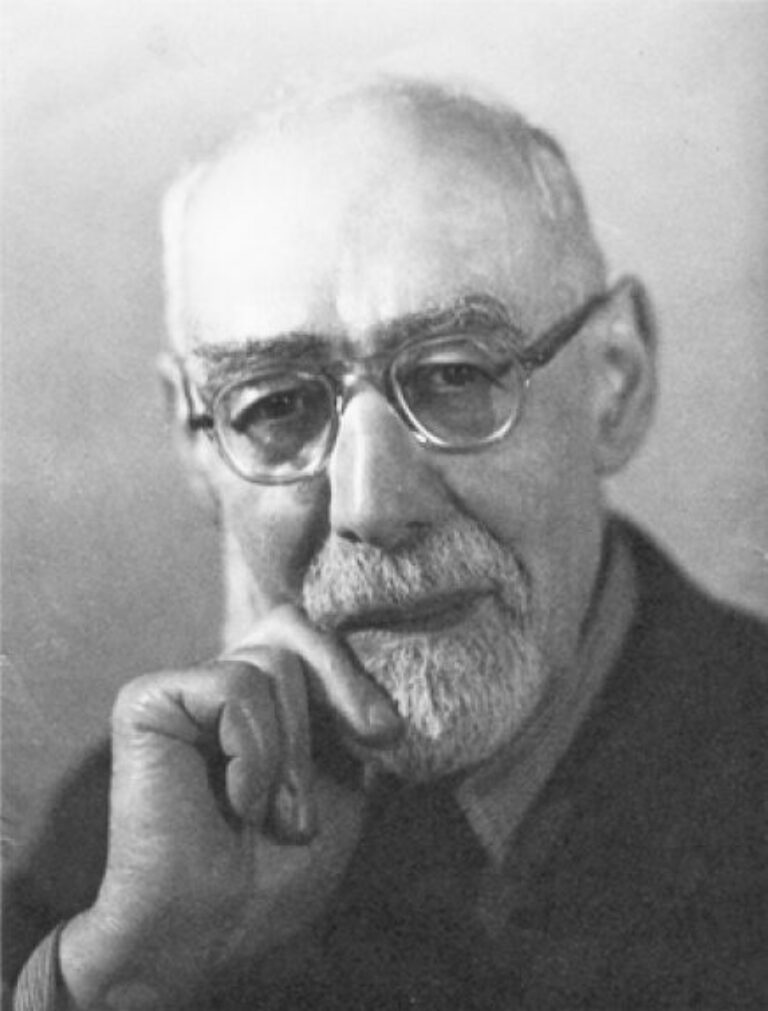
In Berlin, he studied at both Berlin University and the Higher Institute for Jewish Studies, where
he was ordained as a rabbi in 1897. His book The Essence of Judaism, published in 1905,
brought him widespread fame and recognition. In 1912, Baeck began working as a rabbi for
the Berlin Jewish Community and became a lecturer at the Higher Institute for Jewish
Studies shortly thereafter.
During First World War from 1914 to 1918, Baeck served as a field rabbi (or chaplain) in the
German Imperial Army. His experiences and observations during this time had a profound
impact on his later work and theology. After the Nazis came to power in 1933, Baeck
became the president of the Reich Representation of German Jews, an umbrella
organisation uniting all Jewry in Germany from 1933 to 1938. After the Reich Representation
was dissolved in 1939, Baeck directed the Nazi-controlled Reich Association until his
deportation to Theresienstadt on 27 January 1943.
After the Second World War, Baeck moved to the United Kingdom, where his daughter Ruth
lived. After 1945, he taught at Hebrew Union College in the United States, among others,
and eventually became the chair of the World Union for Progressive Judaism. During this
time, he published his second major work This People Israel, part of which he had written
while imprisoned by the Nazis. Leo Baeck died in 1956 in London.
Baeck’s Libraries
Baeck was not only an outstanding scholar but also a passionate book collector. His private
library comprised an impressive collection of over 4,000 volumes, reflecting his wide range
of knowledge and interests. This collection was more than just an accumulation of books; it
was a reflection of his research interests and academic network.
Baeck also belonged to a club of book enthusiasts in Berlin and maintained a close
friendship with Jenny Wilde, the librarian of the Higher Institute for Jewish Studies. Baeck
was known for regularly donating to the Institute’s library. He remembered how important
this publicly accessible library had been to him when he was a penniless student. The
looting of books – first of the Institute’s library and then of his own private collection, when
Baeck was deported to Theresienstadt – hit him hard. About 40 books from his private
collection were found after the war, all that remained of his 4,000 books.
However, rather more of the original 60,000 books in the Institute’s library survived the war, and a debate ensued about the future of these rediscovered books. For example, the
Hebrew University in Jerusalem wanted to bring these books to Jerusalem, as the Institute
no longer existed. Baeck, on the other hand, advocated that they should be sent to England,
where many German Jews, including himself, had found refuge. Shortly before his death, a
college was established in England, which considered itself a successor to the Institute and
was renamed Leo Baeck College after Baeck’s death. The College today houses both books
from the former Institute’s library and parts of Baeck’s second private library, which his
daughter bequeathed to the College.
“As the person is, so is his science.”